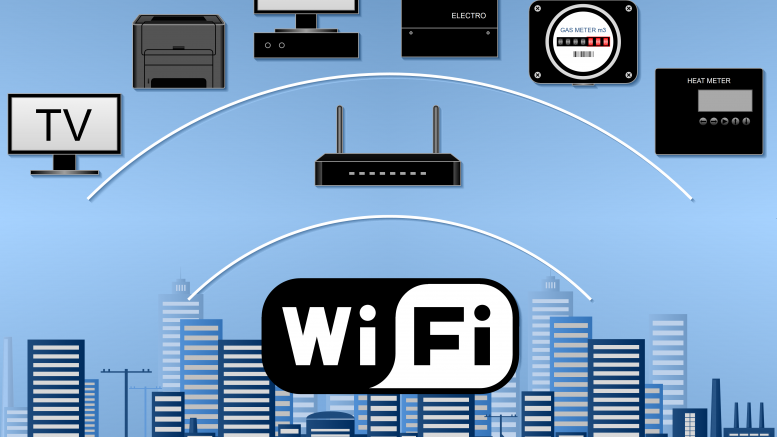
The 6 GHz spectrum band might be the most consequential piece of radio real estate most people have never heard of. Here’s a question almost nobody asks: who actually owns the airwaves your phone uses to load a webpage? Over the past few years, a quiet but intense policy fight has been playing out in Washington over exactly that question, and the outcome has real implications for how wireless networks get built for the next decade.
This isn’t a hypothetical debate. Regulators, industry groups, and telecom companies have been actively negotiating over how the 6 GHz spectrum should be divided, shared, or licensed — and the stakes go well beyond faster home Wi-Fi.
Spectrum Is a Real, Limited Resource
Think of radio spectrum like a highway system. There’s only so much room, and every “lane” — meaning every frequency range — can only carry so much traffic before things start colliding and connections degrade. Unlike a highway, you can’t just build another lane next to it.
Now imagine a few brand-new lanes suddenly open up. Delivery trucks, commuters, and ride-shares all want a say in how those lanes get striped, signed, and enforced. That’s essentially the fight now playing out over the 6 GHz spectrum: valuable new road space just became available, and every group that needs it is trying to make sure the rules favor them.
The usable frequencies for wireless communication are physically finite, and nearly every one of them is already assigned to something: broadcast TV, satellite links, military radar, cell networks, Wi-Fi, and more. That’s why spectrum allocation is handled by regulators rather than left to whoever gets there first. In the US, that’s primarily the Federal Communications Commission, working alongside agencies that manage federal government spectrum use.
When a new chunk of spectrum becomes available for civilian or commercial use, it triggers exactly the kind of fight you’d expect over any limited, valuable resource, because whoever gets access to it can build technology that everyone else can’t. This isn’t the first time this has happened, either. The transition from analog to digital television freed up other valuable bands more than a decade ago, and that reallocation sparked its own round of industry lobbying and legal challenges that took years to resolve.
For everyday consumers, none of this negotiating happens in plain sight. Nobody gets a notification saying a new policy debate just reshaped how their router picks a channel. But the outcome of these fights quietly determines whether your video call holds steady during a big family gathering, or whether a stadium full of phones can all get online at the same time without everything grinding to a crawl.
Why the 6 GHz Spectrum Band Became a Battleground
In 2020, regulators opened up the 6 GHz spectrum band for unlicensed use, which is a big deal because it’s the first major swath of new spectrum handed to Wi-Fi in roughly two decades. You can read more about the technical background of this allocation in Wikipedia’s overview of the U-NII bands. That decision is what made Wi-Fi 6E and, later, Wi-Fi 7 possible. Both rely on that extra room to deliver wider channels, less interference, and more stable connections in places packed with devices, such as stadiums, hospitals, and airports, where dozens or hundreds of devices are all fighting for the same narrow slice of airwaves at once.
But opening that spectrum wasn’t uncontroversial. Some incumbent users of adjacent or overlapping frequencies raised concerns about interference.
Separately, the decision has become entangled in a broader conversation about wireless infrastructure and national competitiveness. That conversation includes debates over how much licensed spectrum should be reserved for mobile carriers building next-generation 5G and future 6G networks, versus how much unlicensed spectrum should stay available to anyone who wants to build a device.
Different industry players, from Wi-Fi equipment makers to mobile carriers to satellite operators, have pushed for outcomes that favor their own technology roadmaps, and policymakers have had to weigh those competing interests against each other. There isn’t a single settled answer here. It’s an ongoing negotiation between groups with legitimately different priorities, and the policy landscape is still being actively shaped as new proposals and objections surface.
If you’re curious how these industry pressures play out on the ground, our look at whether working in telecommunications equipment is still a solid career bet touches on some of the same infrastructure investment questions from a different angle.
This Is Exactly the Kind of Problem WirelessMAN Was Built Around
If this sounds like a strangely familiar problem, that’s because it is one this site’s own history is tied to. IEEE 802.16, the standard this domain is named for, was developed specifically to address how wireless networks share limited spectrum efficiently. Coexistence, allocation, and interference management were core engineering problems the working group tackled directly, long before the 6 GHz spectrum band was on anyone’s radar.
The current spectrum fight is a modern, higher-stakes version of the same underlying question: how do you divide a scarce, physically limited resource among competing technologies and users without degrading everyone’s experience? Back when 802.16 was being drafted, the debate centered on fixed wireless broadband competing with cable and DSL for both spectrum and market share. Today’s 6 GHz spectrum fight is the same coexistence puzzle, just with far more devices, far more players, and far higher stakes riding on the outcome.
Expect This Debate to Keep Resurfacing
Spectrum fights aren’t a one-time event. They’re a recurring feature of wireless technology’s growth. As more connected devices, low-earth-orbit satellite constellations, and AI-driven network systems compete for bandwidth, pressure on the available spectrum will only increase. Some of that pressure is already visible in how quickly software tools are evolving to manage network demand automatically, a trend our comparison of today’s leading NLP tools touches on from the software side of the equation.
The 6 GHz decision won’t be the last time regulators, companies, and industry groups have to hash out who gets access to a limited slice of the airwaves. If anything, expect these debates to become more frequent, not less, as demand for wireless capacity keeps climbing in the years ahead. Every time your Wi-Fi seamlessly avoids a crowded channel, or your phone quietly switches bands in a packed stadium, the 6 GHz spectrum fight is part of the invisible reason it’s possible at all.
About the Author:
Uday Shankar holds a B.Tech in Electronics & Communication and an M.S. in Engineering Management.